Comparisons
Rivian R1S vs Kia EV9: The 2026 Three-Row EV Showdown
The Rivian R1S and Kia EV9 are the two most talked-about three-row electric SUVs of 2026. One costs $22,000 more. Which one actually deserves your driveway?
June 26, 20269 min read
The Rivian R1S and Kia EV9 are the two most talked-about three-row electric SUVs of 2026. One costs $22,000 more. Which one actually deserves your driveway?
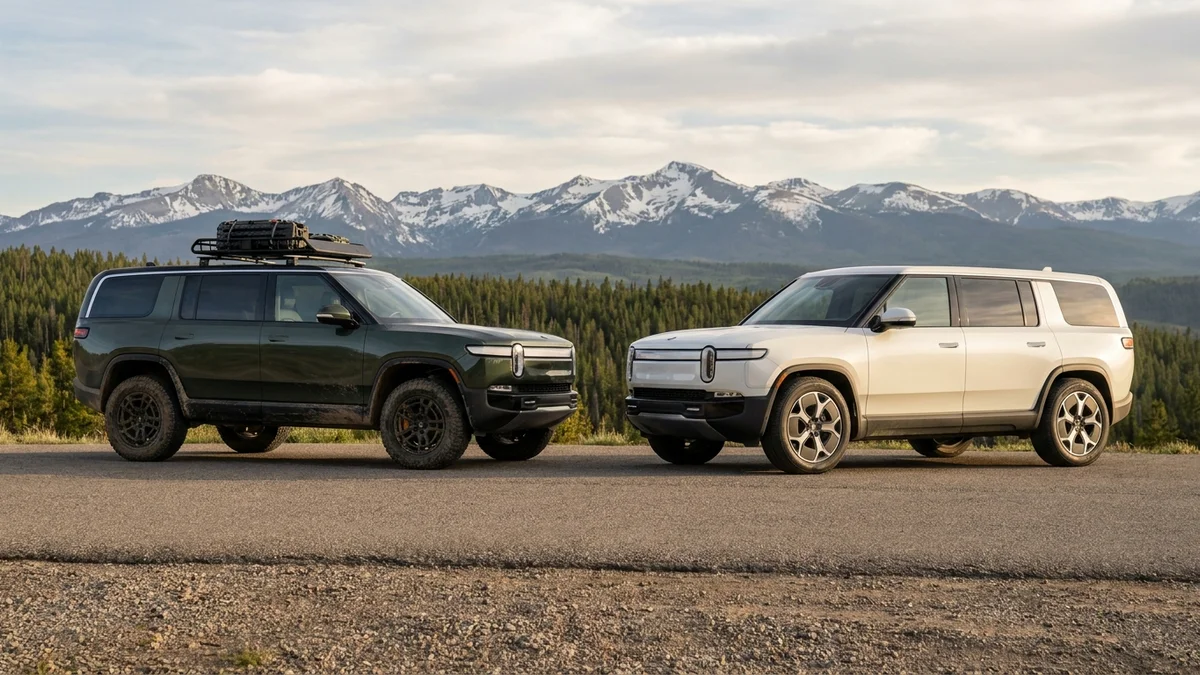
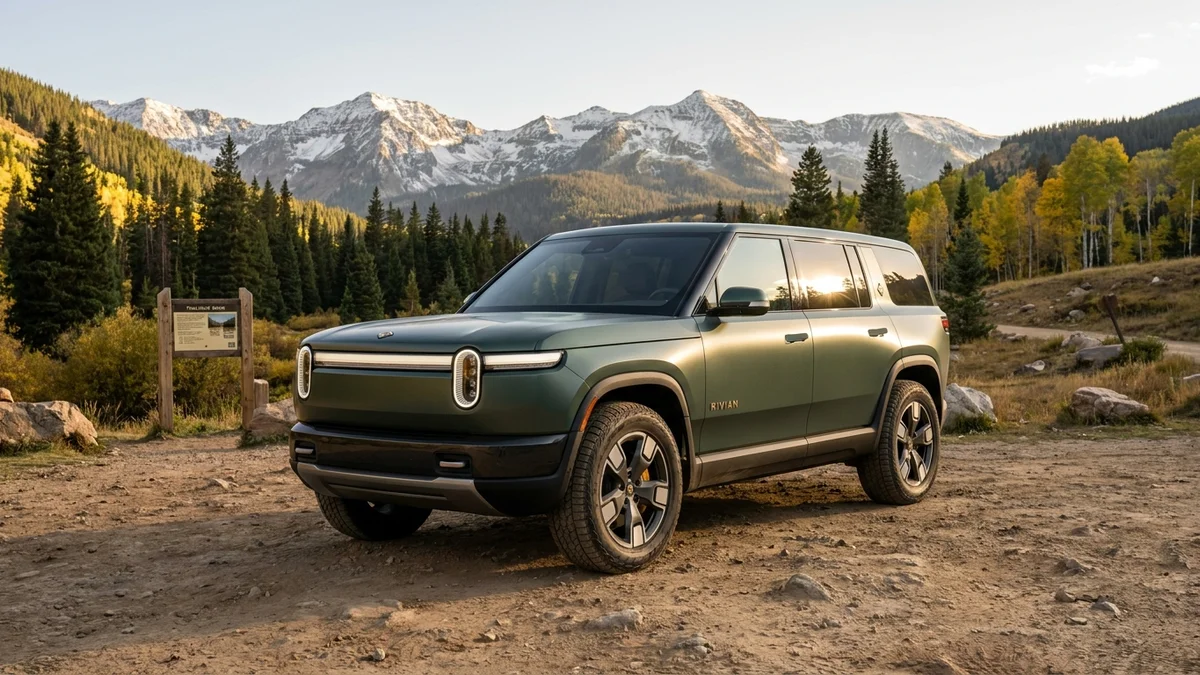
The three-row electric SUV segment used to be a wasteland. Two years ago, if you wanted to haul a family of seven on electrons, your options ranged from "compromised" to "nonexistent." That's no longer the case. In 2026, the Rivian R1S vs Kia EV9 debate is the most important comparison in the electric family-hauler space, and the gap between them is wider than the spec sheet suggests.
On paper, these two share a body style and a row count. In reality, they're built for completely different buyers. The R1S is a $76,990 adventure machine that happens to seat seven. The EV9 is a $54,900 family shuttle that happens to be electric. Both are excellent. Only one is right for you.
Let's break it down.
Interesting wrinkle: if you regularly take your kids to soccer practice, run Costco loads, and occasionally pile in for a road trip, the Kia EV9 is the smarter buy. It's roomier in the third row, dramatically cheaper, and the 800V architecture means it charges faster in real-world conditions than its peak kW figure suggests.
If you live somewhere with actual dirt roads, tow a small trailer, or just want a vehicle that feels engineered like a tank with a luxury cabin bolted on, the Rivian R1S earns every dollar of its premium. The 410-mile EPA-estimated range (Dual-Motor Max pack) and a Tri-Motor 0-60 in a manufacturer-claimed 2.9 seconds are bonuses.
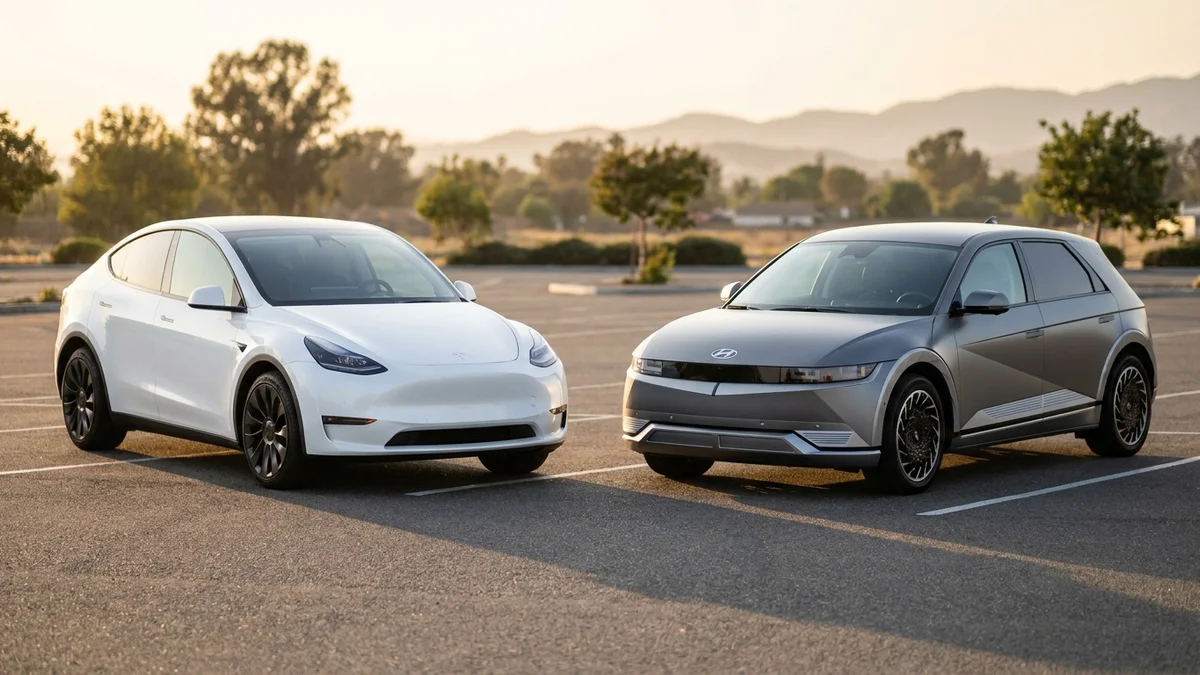
For most American families? It's the EV9. And it's not really close. If a smaller two-row family EV is more your speed, our Model Y vs Ioniq 5 comparison is the next stop.
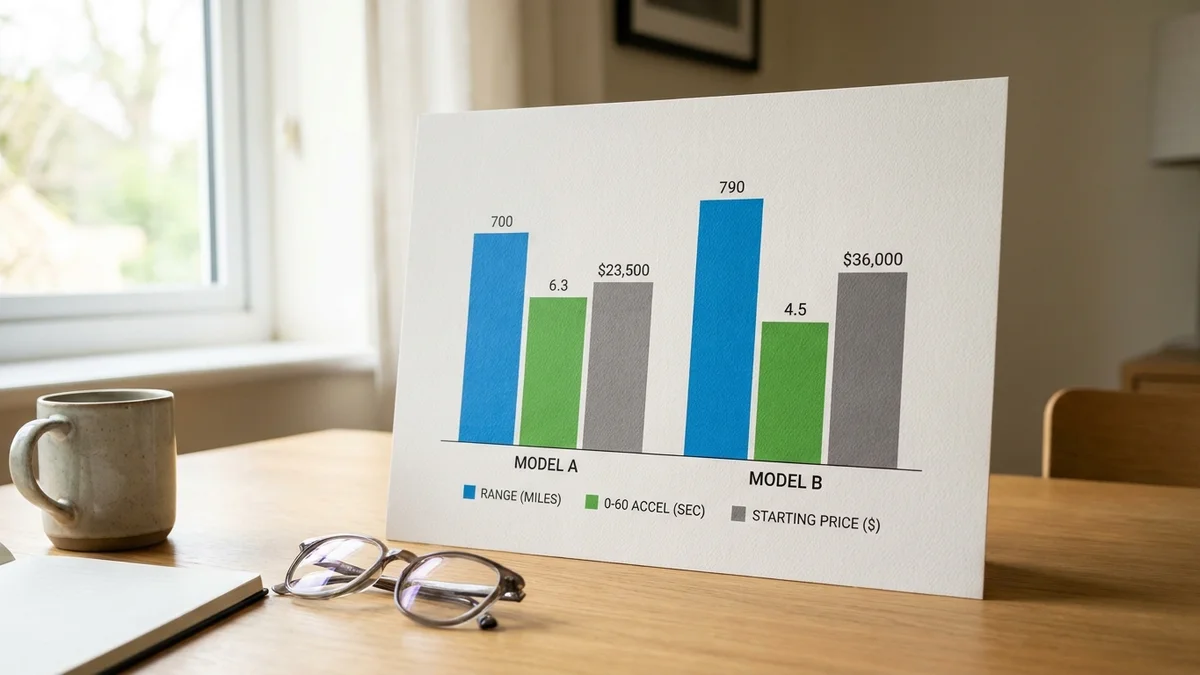
| Spec | Rivian R1S (2026) | Kia EV9 (2026) |
|---|---|---|
| EPA Range | 410 mi (Dual Max pack) | 305 mi (Light Long Range RWD) |
| 0-60 mph | 2.9 sec (Tri-Motor, mfr) | 5.0 sec (GT-Line AWD, mfr) |
| Peak DC Charging | 220 kW | 230 kW (800V) |
| Efficiency | ~2.5 mi/kWh | ~2.8 mi/kWh |
| Starting MSRP | $76,990 (Dual Standard) | $54,900 (Light RWD) |
| Seating | 5 or 7 | 6 or 7 |
| Drivetrain | Standard AWD (dual/tri/quad-motor) | RWD or AWD |
| Editorial Rating | 8.9/10 | 8.6/10 |
The price gap alone, roughly $22,000 between base trims, could fund a Level 2 home charger, three years of public charging, and a decent vacation. Keep that in mind as we work through the rest of this.
This is where the R1S flexes hardest. With the Dual-Motor Max pack, the Rivian R1S delivers an EPA-estimated 410 miles of range, putting it in the top tier of every electric vehicle on sale. The EV9, even in its longest-range Light Long Range RWD trim, tops out at 305 miles.
On paper, that's roughly a 105-mile gap. In practice, it's even bigger, because the R1S manages about 2.5 mi/kWh and the EV9 manages about 2.8 mi/kWh. Both are thirsty by EV standards (a Lucid Air clears 4 mi/kWh in most trims), but the R1S's massive battery does the heavy lifting.
Real-world highway numbers tell a more subtle story. Per InsideEVs highway range tests, three-row EVs typically deliver 75-85% of their EPA rating at a steady 70 mph. That suggests roughly 310-350 highway miles for the R1S Dual Max and 230-260 for the EV9. Either is plenty for a typical day. For cross-country road trips, the Rivian's cushion is genuinely useful.
But here's the honest take: if you're not road-tripping multiple times a year, 305 miles is more than enough. The average American drives about 37 miles per day. You'd charge once a week.
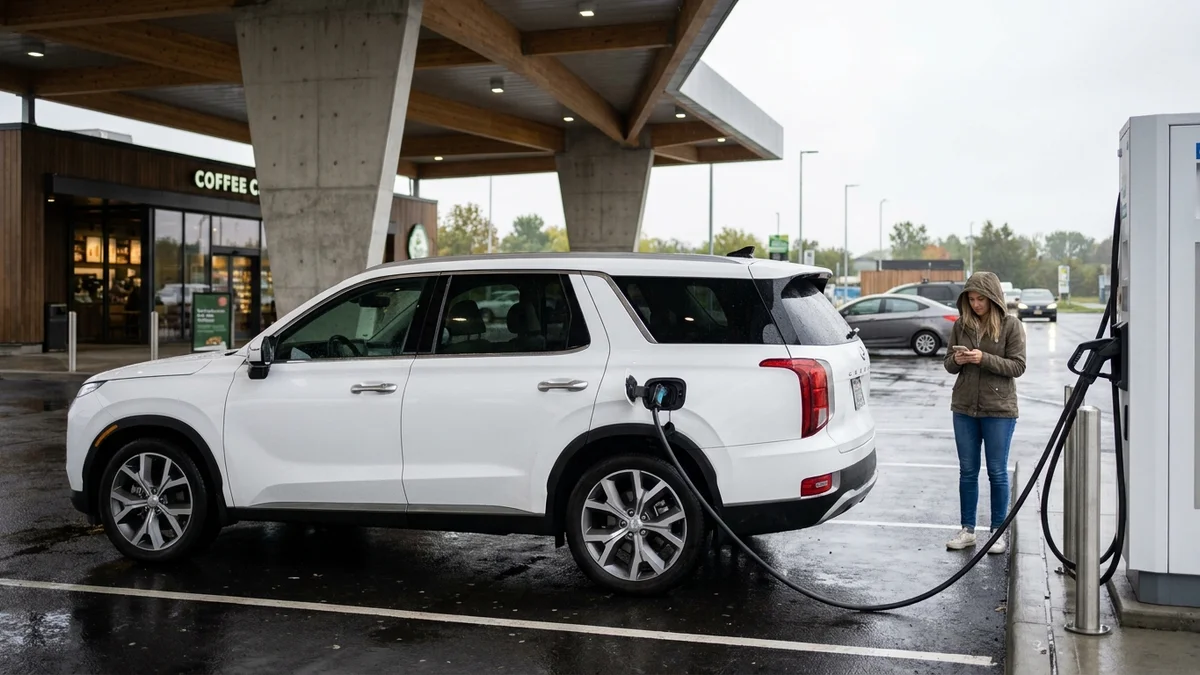
Peak charging numbers are misleading. The EV9's 230 kW peak is comparable to the R1S's 220 kW peak, but that's not what wins charging stops. What matters is how long the vehicle holds high charging speeds across the 10-80% window.
The Kia EV9 uses an 800V electrical architecture (shared with the Hyundai Ioniq 9 and the EV6). According to Kia's official specs, the EV9 runs a 10-80% cycle in about 24 minutes on a 350 kW charger, and Kia advertises adding roughly 150 miles in about 15 minutes under ideal conditions. That's elite, especially for a vehicle this size.
The Rivian R1S, despite its higher capacity, takes longer in absolute terms because there's just more battery to fill. Real-world 10-80% sessions tend to land in the 40-minute range. Still respectable, but not in the same league as the EV9's 800V pace.
And both vehicles now have NACS access. Rivian rolled out Tesla Supercharger compatibility through an adapter program in 2024, and the 2026 Kia EV9 ships with a native NACS port. The Supercharger network is the single biggest practical advantage for road-tripping EV owners right now, and both of these qualify.
A charging tie? Sort of. The EV9 wins on speed, the R1S wins on the range you start with.
This isn't a comparison. A Rivian R1S Tri-Motor hits 60 in a manufacturer-claimed 2.9 seconds. The Dual-Motor Performance does it in roughly 3.4. The Quad-Motor variant (which gets the new Ascend interior trim) is even quicker at a claimed 2.5 seconds. These are supercar numbers attached to a 7,000-pound family SUV.
The Kia EV9 GT-Line AWD does 0-60 in a manufacturer-claimed 5.0 seconds (independent testing has come in a few tenths quicker), which is genuinely fast (faster than most gas-powered three-row SUVs you've ever ridden in), but it's not the same experience. The single-motor RWD EV9 Light is closer to 8 seconds.
More importantly, the R1S has actual off-road chops. Air suspension with up to 14.9 inches of ground clearance at max ride height. Quad-motor torque vectoring on the top trim. Underbody armor. Standard 120V outlets in the cargo area. Per Rivian's specifications, it'll wade through about 3.5 feet of water and tow 7,700 pounds.
The EV9 has none of that. It's a tall wagon. A nice tall wagon, but it's not going anywhere harder than a gravel forest service road.
If you don't off-road or tow, this entire section is irrelevant to your purchase decision. Be honest with yourself.
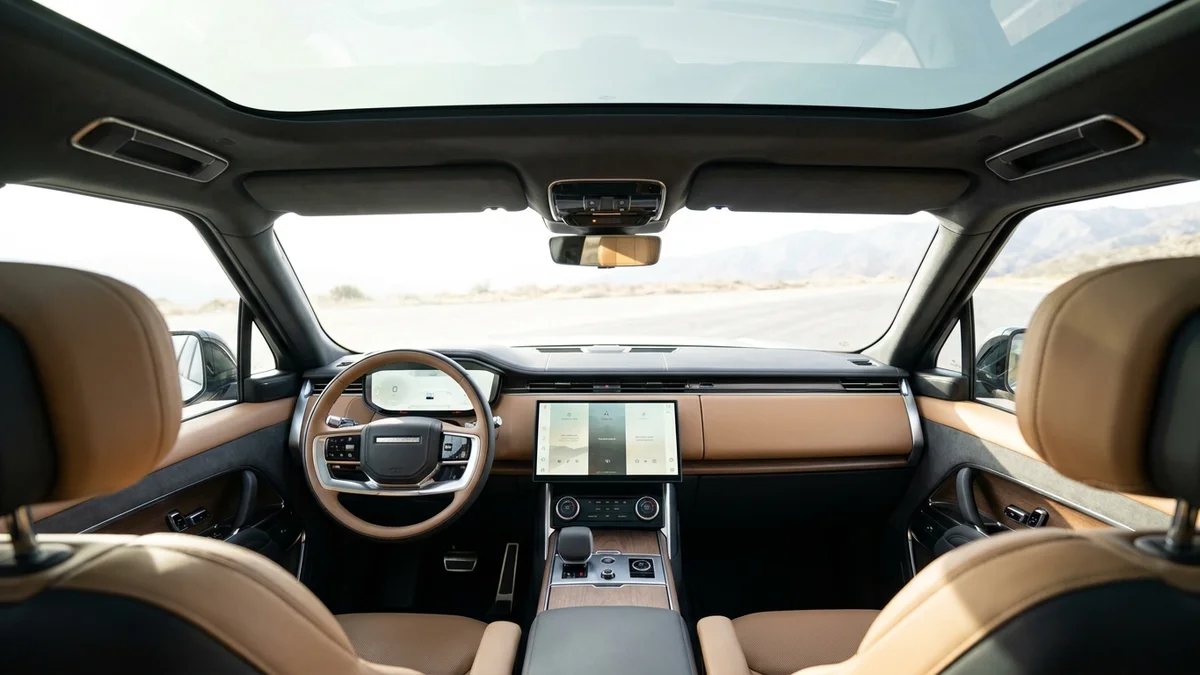
Worth flagging: the R1S cabin is minimalist in a way that splits opinion. There's no instrument cluster behind the wheel (Tesla-style), no Apple CarPlay, no Android Auto. Everything happens on a single large touchscreen. The materials are genuinely premium: real wood, real metal, vegan leather that doesn't feel like plastic. The third row is tight for adults, fine for kids.
The EV9 went the opposite direction. Dual 12.3-inch displays, an available 12-inch head-up display on GT-Line, captain's chairs in the middle row (six-seat config), and a third row that actually fits adults. You also get wireless Apple CarPlay and Android Auto, which a huge percentage of buyers rank as a top-five purchase criterion.
The EV9's interior feels like Kia's design team was told "build a Volvo XC90 but make it electric." The R1S feels like Rivian was told "build a Land Rover that doesn't break."
Which is better depends on whether you value third-row space and phone mirroring (EV9) or material quality and a wow-factor cabin (R1S).
The single best feature of the EV9 isn't a feature at all. It's that the third row is genuinely usable for adults on a two-hour drive. That's rare in this segment, and it's the whole point of buying a three-row SUV.
This is where the EV9 lands its knockout punch.
A well-equipped EV9 still costs roughly $20,000 less than a base R1S. That's the math you need to internalize.
Federal tax credits are not the wildcard they used to be. The federal $7,500 new-EV clean-vehicle credit ended for most buyers on September 30, 2025 and is unavailable on most new 2026 purchases (always check current IRS guidance for your specific configuration, since rules continue to evolve). The EV9 is partially assembled in West Point, Georgia, but even when the credit was active many EV9s only qualified for the partial $3,750 amount because of battery-sourcing rules. The R1S, despite being built in Normal, Illinois, was historically excluded for most configurations because of the $80,000 SUV MSRP cap.
For leases, both manufacturers have been aggressive with incentive pass-throughs. Kia in particular has been running EV9 lease deals around $400-450/month with money down (check current pricing, deals change monthly). Rivian leases exist but they're rarer and pricier.
You commute 30 miles a day, do weekend errands, take one or two road trips a year, and need to fit three kids plus gear. Winner: Kia EV9. It's the right tool. The R1S is overkill, both in capability and cost.
You ski, mountain bike, camp, and your driveway is gravel. You tow a trailer occasionally. You'd actually use 14+ inches of ground clearance. Winner: Rivian R1S. There's no contest. The EV9 simply isn't built for this life.
You drive 800-mile trips multiple times a year and hate stopping. Winner: Rivian R1S. The 410-mile range plus Supercharger access means you stop once for a long lunch instead of twice for shorter sessions. But the EV9 isn't disqualified, it's just slower in transit time.
You want CarPlay, you want big screens, you want your kids to have USB-C ports in row three. Winner: Kia EV9. Rivian's closed-ecosystem approach is a deal-breaker for a lot of buyers.
You want neighbors to ask what you're driving. Winner: Rivian R1S. The EV9 is handsome but anonymous. The R1S has presence.
A short list, because honesty matters (if you want the cheaper Rivian instead, see our Rivian R2 review):
Also a short list:
Both lists are real. Neither is filler.
The Rivian R1S is the better vehicle. The Kia EV9 is the better buy.
That's the honest summary. The R1S is more capable, more luxurious, faster, has more range, and feels more special. It's also $22,000 or more pricier depending on trim, doesn't support CarPlay, and has a third row most adults won't enjoy for long stretches.
The EV9 nails the assignment for what 90% of three-row SUV buyers actually need: space for seven, fast charging, modern tech, and a price that doesn't require a finance degree to justify. It's not perfect (305 miles of range is the weakest part of the package), but it's the most rational electric family vehicle on sale right now.
So here's our recommendation: if you're cross-shopping these two and you don't have a specific reason you need the Rivian (off-roading, towing, status), buy the EV9. Take the savings, install a home charger, and never look back. If you do have that reason, the R1S won't disappoint you.
Both deserve to be on your shortlist. Just for very different reasons.
Sources
Not in 2026. The federal $7,500 new-EV clean-vehicle credit ended for most buyers on September 30, 2025, so new R1S purchases in the 2026 model year are not eligible. Even when the credit was active, most R1S configurations exceeded the $80,000 MSRP cap for SUVs and were disqualified. Always confirm current eligibility on fueleconomy.gov before assuming any credit applies.
The EV9 is rated to tow up to 5,000 pounds when properly equipped, which covers most small travel trailers, popups, and utility trailers. Expect a 30-40% range hit while towing, so a 305-mile EV9 will realistically cover about 180-210 miles per charge with a trailer attached. The Rivian R1S handles 7,700 pounds if you need more capacity.
On a 48-amp Level 2 home charger (11.5 kW), the R1S Max pack takes about 13-14 hours for a full charge, while the EV9 Long Range needs about 9-10 hours. Both can comfortably replenish a full day's driving overnight. Relying on Level 1 (120V) charging for daily use is not practical without significant range loss.
Yes, and that's its standout feature. The EV9 offers up to 32.0 inches of third-row legroom with the second-row captain's chairs, which is genuinely usable for adults on trips up to a couple hours. The Rivian R1S third row is tighter and is best reserved for kids or short adult trips.
It's too early for definitive data, but early indicators favor the R1S due to lower production volumes and stronger brand premium pricing. Kia EV9 used prices have held up reasonably well in 2025-2026. Both depreciate faster than equivalent gas SUVs in their first three years, like most EVs.