Comparisons
Model Y vs Ioniq 5: 2026 Electric SUV Showdown
We pit the 2026 Tesla Model Y Juniper against the Hyundai Ioniq 5 on range, charging, tech and value. One wins on efficiency, the other on character.
June 26, 202611 min read
We pit the 2026 Tesla Model Y Juniper against the Hyundai Ioniq 5 on range, charging, tech and value. One wins on efficiency, the other on character.
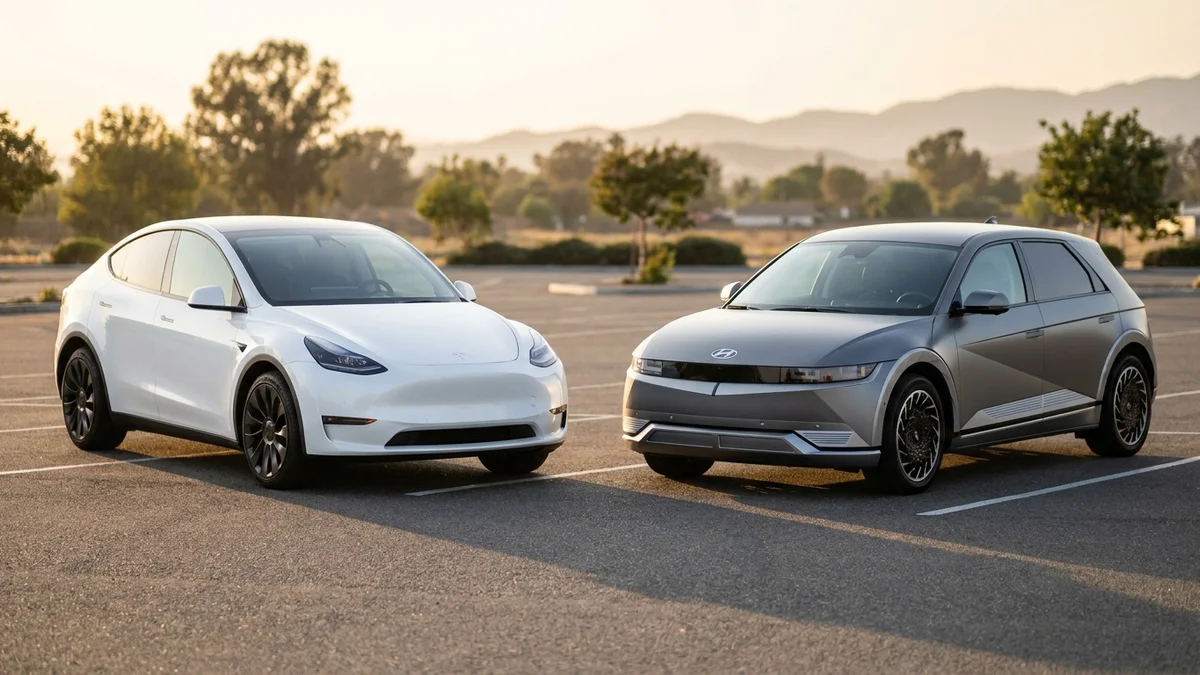
If you want the longest range, the best public charging story, and the lowest energy bill, the 2026 Tesla Model Y is still the easy pick. If you want a nicer cabin, a faster real-world charging curve, better dealer service, and a car that doesn't argue with you about door handles, the 2026 Hyundai Ioniq 5 is the smarter buy. That's the short version of the Tesla Model Y vs Hyundai Ioniq 5 debate in 2026, and honestly, it's closer than it's ever been.
The Juniper refresh fixed most of what people complained about in the old Model Y (the ride, the stalks, the cabin noise). The 2026 Ioniq 5 finally got a native NACS port, so Hyundai owners can roll into a Supercharger without an adapter for the first time. So the gap that used to be a canyon is now more like a creek you can step over depending on which side of the river you live on.
Let's get into the numbers.
| Spec | 2026 Tesla Model Y (Juniper) | 2026 Hyundai Ioniq 5 |
|---|---|---|
| Starting MSRP | $44,990 | $35,000 |
| EPA Range (peak) | 357 mi | 318 mi |
| 0-60 mph (mfr.) | ~4.6s (LR AWD) | ~4.6s (AWD) |
| Peak DC Fast Charging | 250 kW | 235 kW (800V) |
| Efficiency | 3.9 mi/kWh | 3.5 mi/kWh |
| Native Charging Port | NACS | NACS |
| Editorial Rating | 8.8/10 | 8.6/10 |
Close on paper. Very different in person.
The Model Y Juniper carries an EPA-estimated 357 miles of range on its peak Long Range RWD trim, while the Ioniq 5 tops out around 318 miles on its SE RWD long-range battery. That's a 39-mile gap, or roughly 12%. Real, but not the chasm some Tesla fans pretend it's, especially once you factor in price.
Where Tesla really wins is efficiency. At 3.9 mi/kWh, the Model Y squeezes more miles out of every kilowatt than almost any electric SUV on sale. The Ioniq 5 manages 3.5 mi/kWh. Over a year of driving 12,000 miles, that's roughly 350 extra kWh you'd pay for in the Hyundai. At a national average residential rate of about 16 cents per kWh per the EIA, that's around $55 a year. Not life-changing, but it adds up over a 7-year ownership window.
Real-world range tells a more subtle story. According to InsideEVs highway range tests, the Model Y typically hits 85-90% of its EPA figure on the highway at 70 mph, while the Ioniq 5 lands around 80-85%. So in cold weather or at sustained interstate speeds, the gap can stretch closer to 30-40 miles. Worth knowing if you live in Minnesota.
And if you tow or haul, both cars will lose roughly 40-50% of their range pulling anything substantial. Neither is a Rivian R1S.
This used to be a Tesla landslide. It isn't anymore.
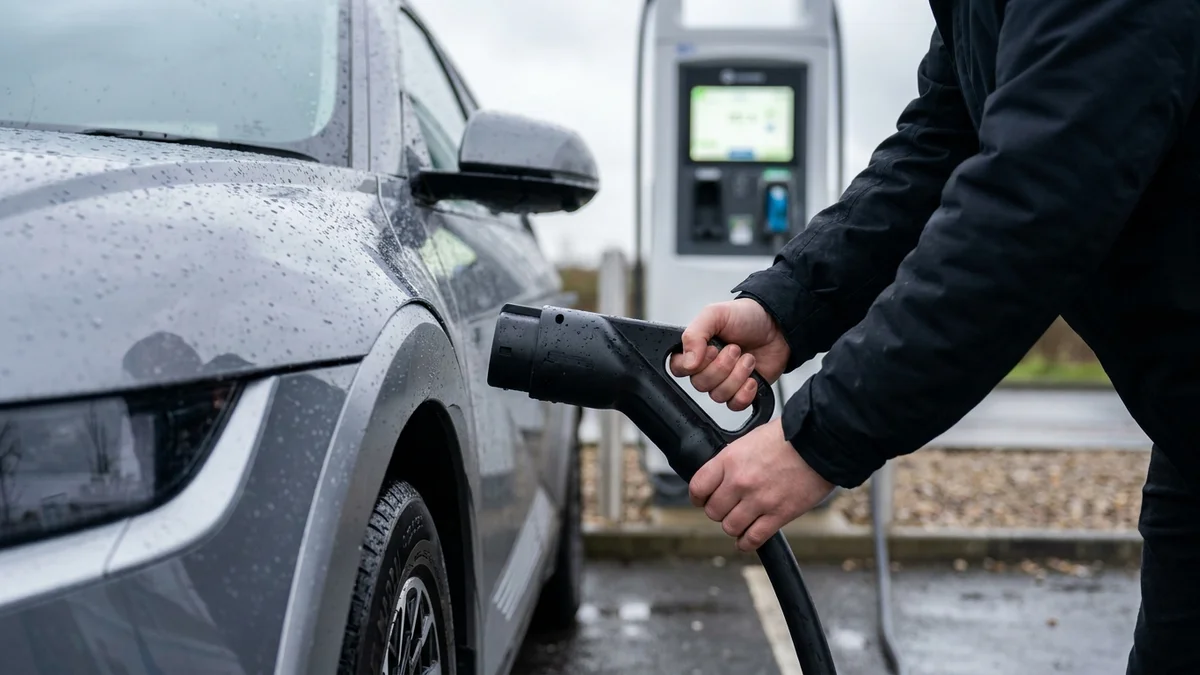
The Model Y charges at up to 250 kW on a V3 or V4 Supercharger. Standard 10-80% takes around 27 minutes in ideal conditions. Tesla's Supercharger network is still the gold standard for road-tripping in North America: over 27,000 stalls in the US as of mid-2026, reliability rates north of 98%, and prices that hover around 28-40 cents per kWh depending on time of day.
The Ioniq 5 charges at up to 235 kW, which sounds slower. But it runs on an 800V architecture, and that changes everything. Its charging curve stays flat much longer than the Model Y's, which throttles aggressively after 50%. Hyundai claims a 10-80% charge in 18 minutes on a 350 kW station. That's the fastest mainstream electric SUV charge in this price bracket. Not by a little. By a lot.
And now the Ioniq 5 has a native NACS port baked in from the factory. So Ioniq 5 owners get Supercharger access AND faster sessions at Electrify America's 350 kW stations. Tesla owners are still locked into Tesla's network for peak speeds (most CCS-with-adapter sessions cap around 150 kW). Per Electrify America, there are now over 1,000 stations with 350 kW capability nationwide.
If your road trips run east-west on I-80 or I-10, Tesla still wins on station density. If they run through the Southeast or Pacific Northwest, the gap is shrinking fast.
On paper the two AWD trims are nearly identical on 0-60, both in the mid-4-second range based on manufacturer figures. In reality both are quick enough that you'll never wish for more unless you're cross-shopping a Model Y Performance or the Ioniq 5 N (which is a different conversation entirely).
The Juniper refresh did the Model Y a huge favor on the road. Tesla finally added frequency-selective dampers and the new acoustic glass, and the cabin is dramatically quieter than the 2024 car. Ride quality is now genuinely good, not just "better than before." Steering is still numb, but nobody buys a Model Y for steering feel.
The Ioniq 5 is the more characterful drive. Slower steering, softer suspension, but it feels planted and confident. The retro hatch styling means decent visibility too (something the Model Y still struggles with thanks to that sloped roof and tiny rear glass).
This is where the two cars diverge most sharply.
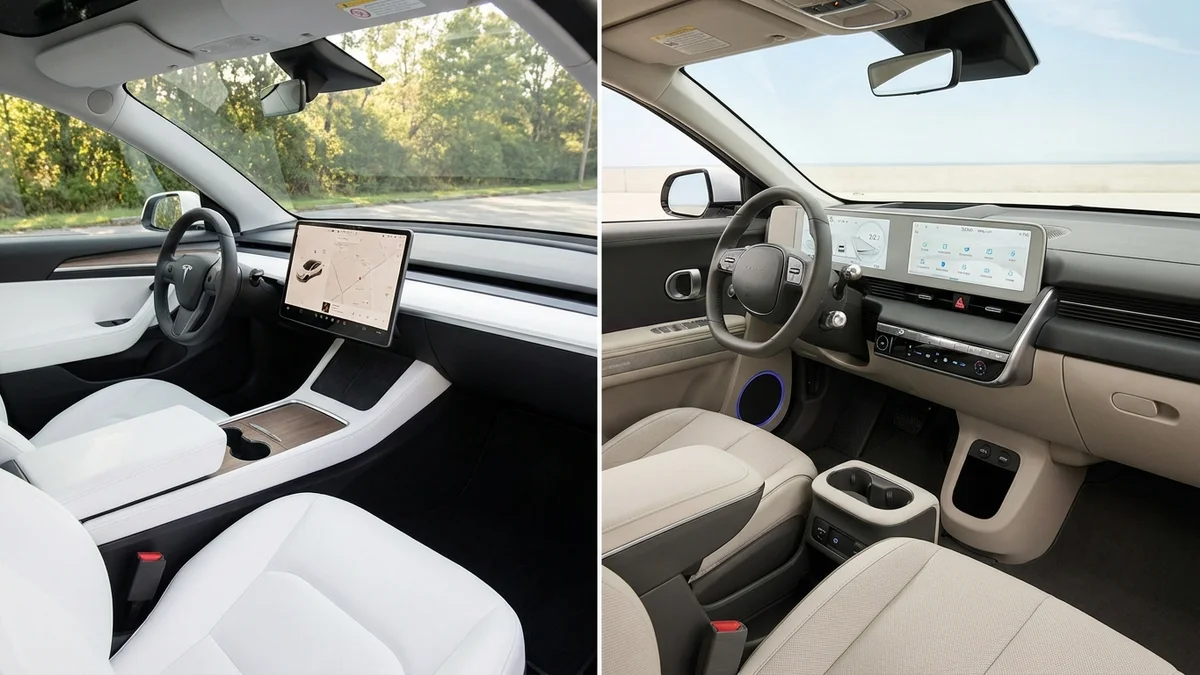
The Model Y is minimalist to the point of being austere. One 15-inch screen runs everything: climate, mirrors, glove box, gear selection. There are no stalks (the Juniper killed them off). You select drive and reverse from a touch swipe on the screen. Some people love it. Some people throw their phones across the cabin in frustration. We're somewhere in the middle.
Materials are decent for the price. Build quality is finally consistent (the panel-gap memes are fading). The new rear seat has its own 8-inch display for kids, which is a genuinely good addition. Cargo space is generous: 76 cubic feet with seats down, plus the frunk.
The Ioniq 5's cabin is a different planet. Twin 12.3-inch displays. Real physical buttons for climate. A flat floor that turns the second row into a lounge. Sliding center console. Materials feel more upscale (the recycled fabrics are softer than they look). Cargo is smaller at 59 cubic feet with seats down, but the second row is easily the more comfortable of the two for adults.
And the Ioniq 5 has vehicle-to-load (V2L) capability, meaning you can run power tools, a fridge, or a heater off the car. The Model Y can't do that. For campers, contractors, and anyone with an unreliable grid, that's a meaningful feature.
On software, Tesla is unbeatable. Over-the-air updates that actually add features, a genuinely useful navigation system that knows your battery state, and the most polished app of any automaker. Hyundai's Bluelink app is fine. Just fine. The infotainment lacks some streaming-app integrations Tesla offers natively, and Apple CarPlay/Android Auto support varies by trim and model-year build.
Tesla's standard Autopilot handles lane-centering and traffic-aware cruise. Enhanced Autopilot is $6,000 and adds auto lane change and Navigate on Autopilot. Full Self-Driving (Supervised) is $8,000 or $99/month, and despite the name, you must keep your hands on the wheel and eyes forward. According to NHTSA's standing order, Tesla still reports more Autopilot-involved incidents than any other automaker, though usage rates are also vastly higher.
Hyundai's Highway Driving Assist 2 is included on most trims. It does adaptive cruise, lane centering, and even automatic lane changes with a turn-signal tap. It's not as ambitious as FSD, but it works reliably and doesn't ask you to pay extra for the privilege. For most commuters, it's all you actually need.
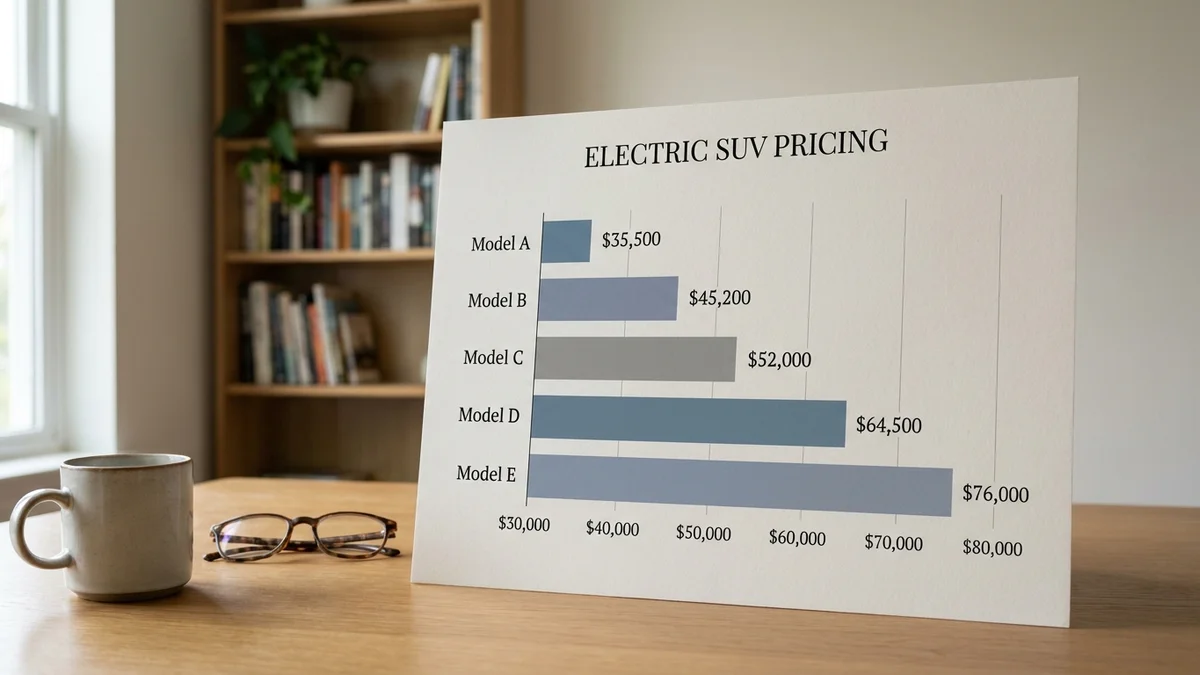
The Model Y Juniper starts at $44,990 for the rear-wheel-drive Premium (Long Range RWD). The Long Range AWD is $48,990. The Performance AWD trim is $57,490.
After the 2026 price cuts, the Ioniq 5 SE Standard Range starts at $35,000. The SE with the larger battery is around $37,500, the SEL is around $42,000, and the Limited and XRT trims top the lineup at roughly $45,075 to $48,325 with the tow package.
Federal tax-credit eligibility is the wild card. Both cars are US-assembled (the Ioniq 5 moved to Georgia production in 2025, and Tesla builds the Model Y in Fremont and Austin). But credit eligibility depends on battery component sourcing, your income, and lease vs purchase. Check current eligibility on fueleconomy.gov before assuming either will qualify for the full $7,500. Hyundai's lease deals have historically been more aggressive than Tesla's, so if you're leasing, the Ioniq 5 often comes out cheaper net of incentives. As of early 2026, Hyundai is offering point-of-sale lease credits that effectively pass the $7,500 directly to lessees.
Insurance is another sneaky cost. Per Insurify data, Model Y insurance premiums run roughly 15-25% higher than the Ioniq 5 nationally, driven by Tesla's higher repair costs and parts complexity.
Over 5 years and 60,000 miles, both cars come out close on raw energy costs. Tesla's efficiency edge saves maybe $300-400 over the period at average rates. Maintenance is similar (both are EVs, so brake pads last forever and there's no oil to change).
Where they diverge: depreciation and repair costs.
Tesla resale has been weak. The brand cut new-car prices repeatedly through 2024 and 2025, which torched used values. The Ioniq 5 has held value better in dollar terms, though its lower MSRP means percentage depreciation is similar. According to iSeeCars, 3-year-old Model Ys lose around 45-50% of their original MSRP. Ioniq 5s lose 40-45%.
Repairs are the bigger story. Tesla service is centralized and can be brutally expensive for body work because of the giga-cast structural parts. Insurance companies have totaled lightly-damaged Model Ys because the repair bills exceed the car's value. The Ioniq 5 uses conventional unibody construction, and Hyundai has a dealer network with real service bays in most cities. Warranty is also longer on the Hyundai: 10 years / 100,000 miles on the powertrain vs Tesla's 8 years / 120,000 miles.
Pick the 2026 Tesla Model Y if:
Pick the 2026 Hyundai Ioniq 5 if:
The Model Y is the better appliance. The Ioniq 5 is the better car. Which one you should buy depends on whether you see your EV as transportation or as a thing you actually want to spend time in.
Daily commuter, urban/suburban: Either works. Ioniq 5 is more pleasant to live with day-to-day. Model Y is cheaper to fuel.
Cross-country road tripper: Model Y, by a narrowing margin. Supercharger density still wins on most interstate routes, especially through the Mountain West.
Family hauler (kids, dogs, gear): Ioniq 5. Better back-seat space, more usable controls when you're juggling a toddler, V2L for camping trips.
Performance shopper: Model Y Performance at around $57,490 (manufacturer-claimed 3.3s 0-60) is the cheaper option than the Ioniq 5 N (which is fantastic but starts around $66,200).
Lease shopper: Ioniq 5, almost every month of 2026 so far. Hyundai's lease deals have been consistently better than Tesla's.
First-time EV buyer who's nervous about charging: Model Y. The Supercharger network removes 80% of range anxiety on day one.
The 2026 Tesla Model Y wins this comparison on paper. It has more range, better efficiency, faster real-world charging access at Tesla's network, and the most polished EV software money can buy. We rate it 8.8/10 for good reason.
But the Ioniq 5 wins on the showroom floor. Its cabin feels worth $35,000 in a way the Model Y's doesn't. Its charging curve is faster where 350 kW stations exist. Its dealer network is a real asset when something breaks. And it has actual buttons, which in 2026 has become a luxury feature. We rate it 8.6/10.
If you're picking purely on data, take the Tesla. If you're picking on the experience of owning the car for the next five years, take the Hyundai. Most buyers should test-drive both back-to-back at a dealer and trust their gut. Both are excellent. Neither is perfect. And the segment is more competitive than ever, with the Rivian R2 and Chevy Equinox EV breathing down both their necks at lower prices.
That's the Tesla Model Y vs Hyundai Ioniq 5 verdict for 2026. Different cars for different people, and that's a much healthier place for the EV market than the Tesla-or-nothing reality we lived in three years ago.
Sources:
Yes. The 2026 Ioniq 5 ships with a native NACS port from the factory, so it plugs directly into V3 and V4 Superchargers without an adapter. Charging speeds at Tesla stations typically cap around 125 kW because most Superchargers are 400V, while peak 235 kW speeds require an 800V-capable station like Electrify America's 350 kW units.
The Ioniq 5 is consistently cheaper to insure. Per Insurify aggregated data, Model Y premiums run roughly 15-25% higher than Ioniq 5 premiums nationally, driven by Tesla's expensive structural giga-cast repairs and limited body-shop network. Expect $1,800-$2,400 a year on the Tesla and $1,400-$1,900 on the Hyundai for a clean driver in most states.
Both are rated to tow up to 2,500 pounds (Model Y Long Range RWD) and the Ioniq 5 RWD is rated at around 2,300 pounds; AWD variants can be higher. Expect range to drop by 40-50% while towing at highway speeds, which means a real-world 170-200 mile range on the Model Y Long Range and around 150-170 miles on the Ioniq 5 RWD pulling a small trailer. Neither is a great long-distance tow vehicle compared to a Rivian R1S or F-150 Lightning.
The 2026 Hyundai Ioniq 5 covers its battery for 10 years or 100,000 miles, whichever comes first. The 2026 Tesla Model Y covers its battery for 8 years or 120,000 miles on the Long Range trim, with a guaranteed minimum 70% capacity retention. Both warranties transfer to subsequent owners, which helps used resale value.
Both are US-assembled (Ioniq 5 in Georgia, Model Y in Fremont and Austin), but full credit eligibility depends on battery component sourcing rules that change annually and your household income. As of early 2026, both have qualified for at least partial credits, and Hyundai has been passing the full $7,500 through as a lease credit. Verify current status at fueleconomy.gov before assuming.