Reviews
Rivian R2 Review: A $45K Electric SUV With Real Muscle
The Rivian R2 brings the brand's adventure DNA to a mainstream $45,000 price point. We break down range, charging, value, and who should actually buy one.
June 26, 20269 min read5 views
The Rivian R2 brings the brand's adventure DNA to a mainstream $45,000 price point. We break down range, charging, value, and who should actually buy one.
Rating: 8.5/10
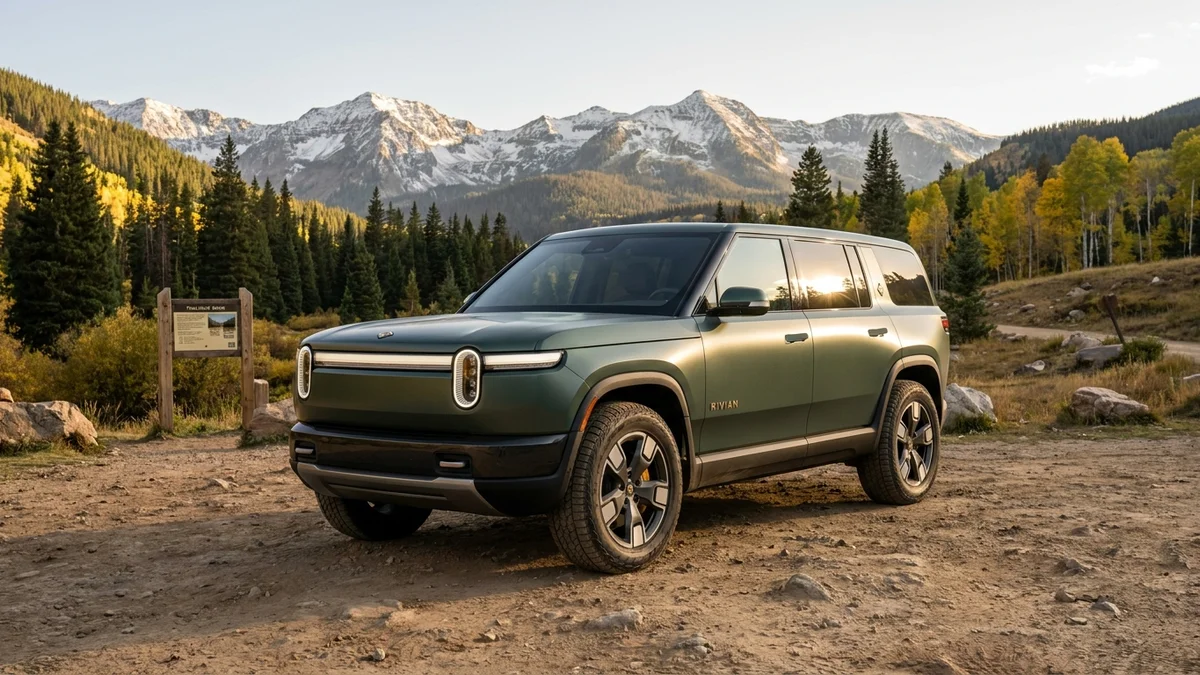
The Rivian R2 is the most credible challenger the Tesla Model Y has faced in years. The dual-motor AWD version is slightly slower than a Model Y Premium AWD, a little less efficient, but it brings genuine off-road chops and a cabin that doesn't feel built to a Tesla-grade cost target. With a $45,000 Standard RWD entry point and a $53,990 dual-motor AWD volume trim, the R2 is the rare EV that actually moves the needle.
Best for: Outdoorsy buyers, families wanting a Rivian without the R1S mortgage, and anyone tired of the Model Y's minimalism.
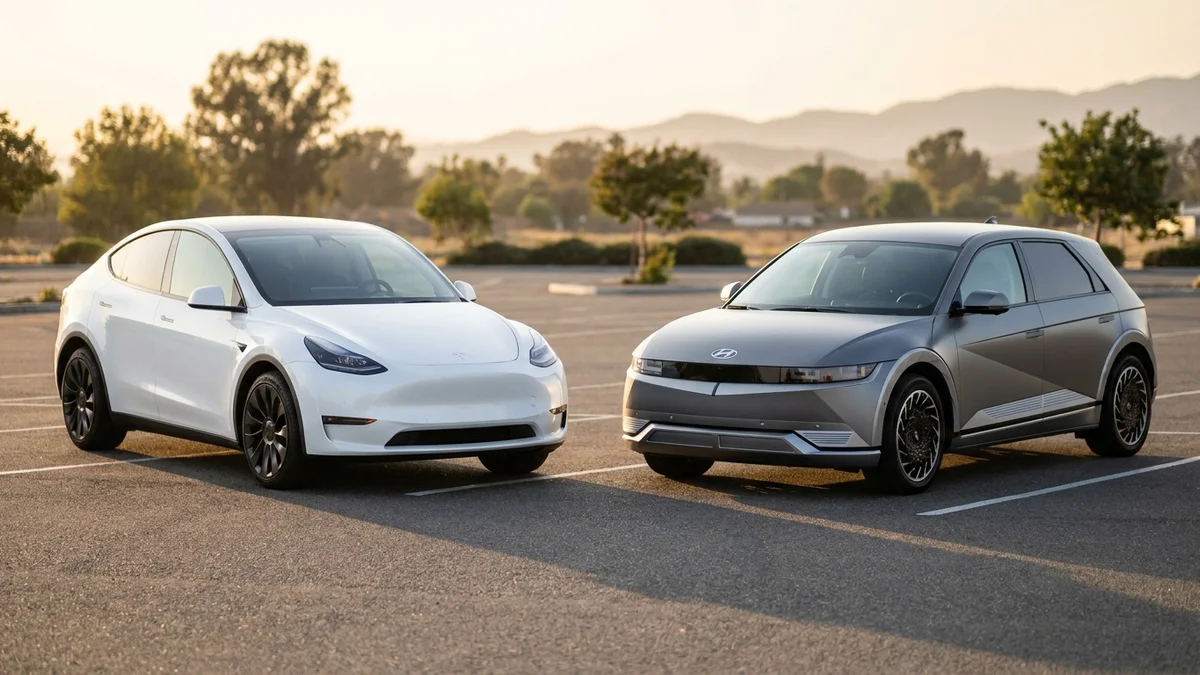
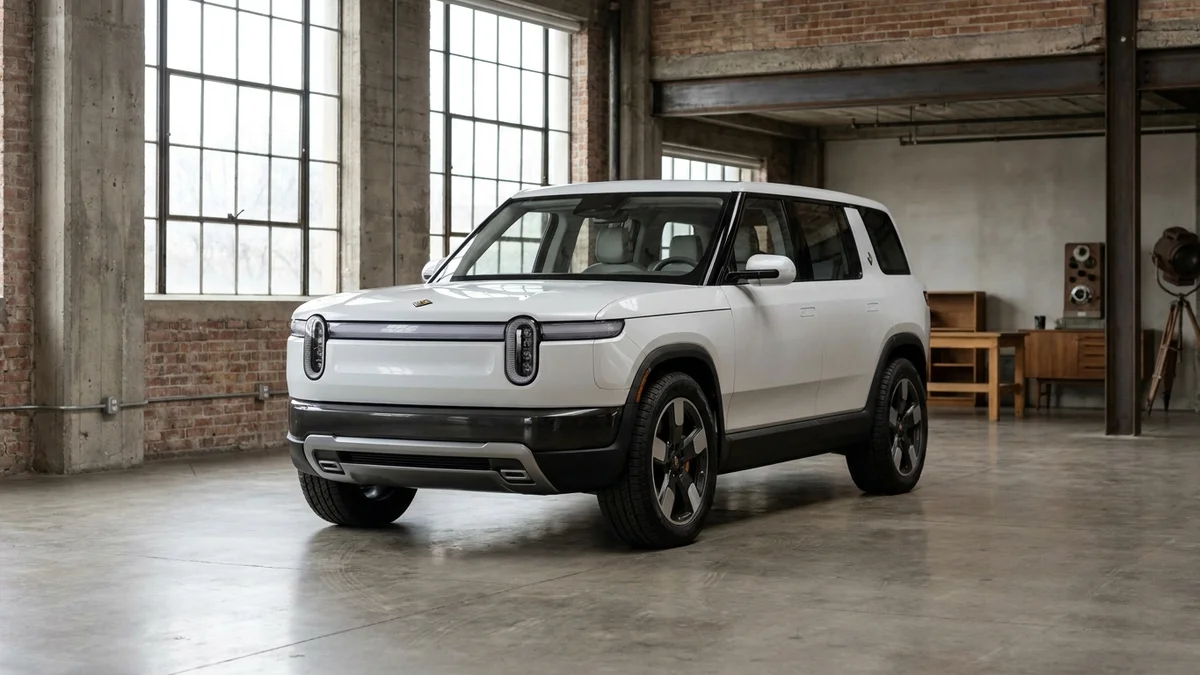
The 2026 Rivian R2 is the company's mainstream midsize electric SUV, built to drag the R1 formula down-market by roughly $20,000-30,000 depending on trim. It's a slightly smaller, simpler R1S that swaps quad-motor exotica for a dual-motor AWD layout (or a single-motor RWD setup on the base trim) and a single-screen dashboard. Starting at $45,000 for the Standard RWD trim, it's aimed squarely at the Tesla Model Y, Hyundai Ioniq 5, and Kia EV6.
The R1S and R1T have been critical darlings, but they live in the $70,000-plus stratosphere where roughly nobody shops. The R2 is the Rivian most people can actually afford. And early production matters here, so verify final EPA numbers and trim pricing against Rivian's configurator before you sign anything.
This review focuses on the Premium dual-motor AWD trim ($53,990), which Rivian quotes at 330 miles of EPA-estimated range. The single-motor RWD variants ($45,000 base, $48,490 Long Range) follow later and trade speed for value.
| Trim | Drivetrain | Range | Starting Price |
|---|---|---|---|
| R2 Standard RWD | Single-motor RWD | 275+ mi (Rivian est.) | $45,000 |
| R2 Standard RWD Long Range | Single-motor RWD | 345 mi (Rivian est.) | $48,490 |
| R2 Premium AWD | Dual-motor AWD | 330 mi (EPA est.) | $53,990 |
| R2 Performance AWD | Dual-motor AWD | 330 mi (EPA est.) | $57,990 |
Federal tax credit eligibility is genuinely unclear at launch, so check current eligibility based on battery sourcing and your income before assuming a $7,500 discount.
This is a review, not a brochure, so let's get into where the R2 actually earns its 8.5 rating.
Rivian quotes 330 miles of EPA range for the Premium and Performance dual-motor AWD R2 (dropping to 307 miles with all-terrain tires), putting it right in the meaty part of the segment. For reference, the 2026 Tesla Model Y Premium AWD is rated at 327 miles, the Hyundai Ioniq 5 Long Range tops out around 318 miles, and the Kia EV6 Long Range RWD lands at 319 miles. So the R2 is right at the top of its class, with Tesla's Premium RWD (357 mi) being the only nearby competitor that beats it. (For a deeper head-to-head with the segment's volume seller, see our Model Y vs Ioniq 5 comparison.) Rivian historically delivers very close to its EPA numbers in mixed driving, which can't be said for every brand in this segment.
Efficiency works out to roughly 3.5 mi/kWh from the 87.9 kWh usable pack — decent if not spectacular. The Model Y still wins that battle thanks to a lower drag coefficient, and the R2's boxier shape pays an aerodynamic tax.
Peak DC fast charging tops out around 210 kW on Rivian's 400-volt architecture. That's slower than the 235-kW-plus peaks you'll see on the 800-volt Ioniq 5 or EV6, but faster than the Ford Mustang Mach-E (150 kW) or Chevrolet Equinox EV (150 kW). And critically, the R2 ships with a native NACS port from day one, so you get Supercharger access without an adapter dance.
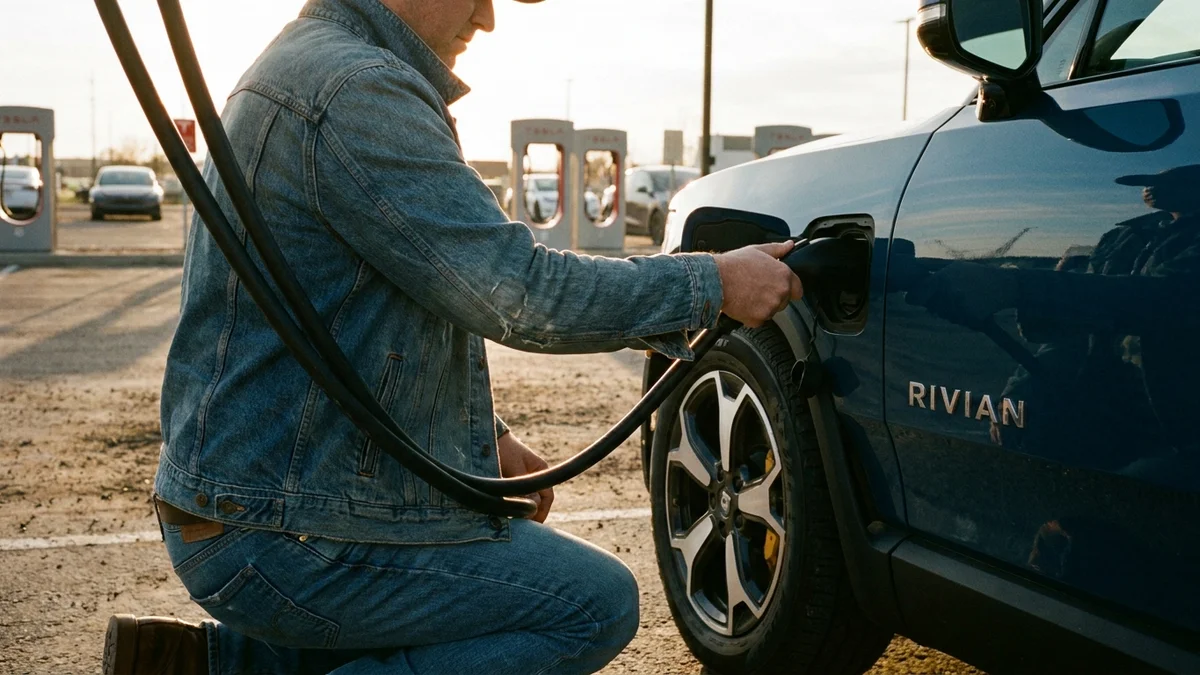
Based on Rivian's published targets, 10-80% should land in roughly 29 minutes under ideal conditions. Expect 35-40 minutes in cold weather, which is normal for the class.
The Premium dual-motor R2 hits 60 mph in a Rivian-claimed 4.6 seconds. The Performance trim drops that to 3.6 seconds with 656 hp on tap. The Premium pace puts the R2 right alongside the Model Y Premium AWD (4.6s) and a touch behind the Ioniq 5 N. For a midsize SUV with adventure pretensions, that's all the speed you'll ever use. The Standard RWD trims are noticeably slower at a manufacturer-claimed 5.9 seconds.
Where the R2 separates itself is the suspension tuning. Air suspension is offered (not standard, and not cheap), and the standard steel-spring setup keeps the body composed without that floaty Ioniq 5 feel. Rivian's chassis people clearly stole the playbook from the R1.
This is the differentiator. No other EV at this price has anywhere near the R2's trail credibility. Rivian quotes 9.6 inches of ground clearance, with an approach angle of 25°, departure of 26°, and breakover of 20.6° — figures that shame the Model Y. There's a proper rock-crawl drive mode, hill descent control, and underbody protection.
A Hyundai Ioniq 5 owner can fantasize about Moab. An R2 owner can actually get there.
The R2 interior pulls heavily from the R1 refresh. Real switchgear lives on the steering wheel. Materials feel a class above the Model Y, with proper textured plastics and what Rivian calls a vegan leather wrap on the upper dash. A 15.6-inch center screen handles infotainment; Tesla's Model Y still refuses to give buyers a driver-facing display.

The rear seats fold flat with one pull. The roof glass is electrochromic on higher trims. There's a 5.2 cu-ft frunk that swallows a carry-on bag plus charging cables. These aren't exotic features in 2026, but the execution feels considered rather than cost-engineered.
Spec sheets only tell you so much. So what is the R2 actually like to live with day to day?
Owners of the R1 platform consistently report seeing 90-95% of EPA-rated range in mild weather. If that pattern holds for the R2 AWD, you're looking at roughly 300-310 miles of usable highway range from a 330-mile EPA estimate. Winter hits hard, as it does on every EV; expect 230-260 miles in 20-degree weather with heat blasting.
For context, that's enough range to handle 95% of weekly commutes without thinking about charging. Road trips are where you'll feel the 210 kW charging cap most: a Model Y will gain miles slightly faster on a Supercharger stop.
NACS at launch is the right call. You get access to Tesla's roughly 37,000-plus US Supercharger stalls plus the Rivian Adventure Network, which has grown past 1,000 stalls focused on national-park routes and rural interstates. CCS sites work via the in-car adapter, which Rivian includes.
Home charging on a Level 2 setup adds roughly 25-30 miles of range per hour, which works out to a full overnight refill from 20% to 100% on most home wall connectors.
The R2 rides on a 115.6-inch wheelbase, with up to 79.4 cubic feet of total cargo behind the front seats (rear seats folded) and an additional 5.2-cu-ft frunk. That's competitive with the Model Y and bigger than the EV6. Rear legroom is genuinely usable for adults on long trips, not just "adults under 5'10 for under an hour."
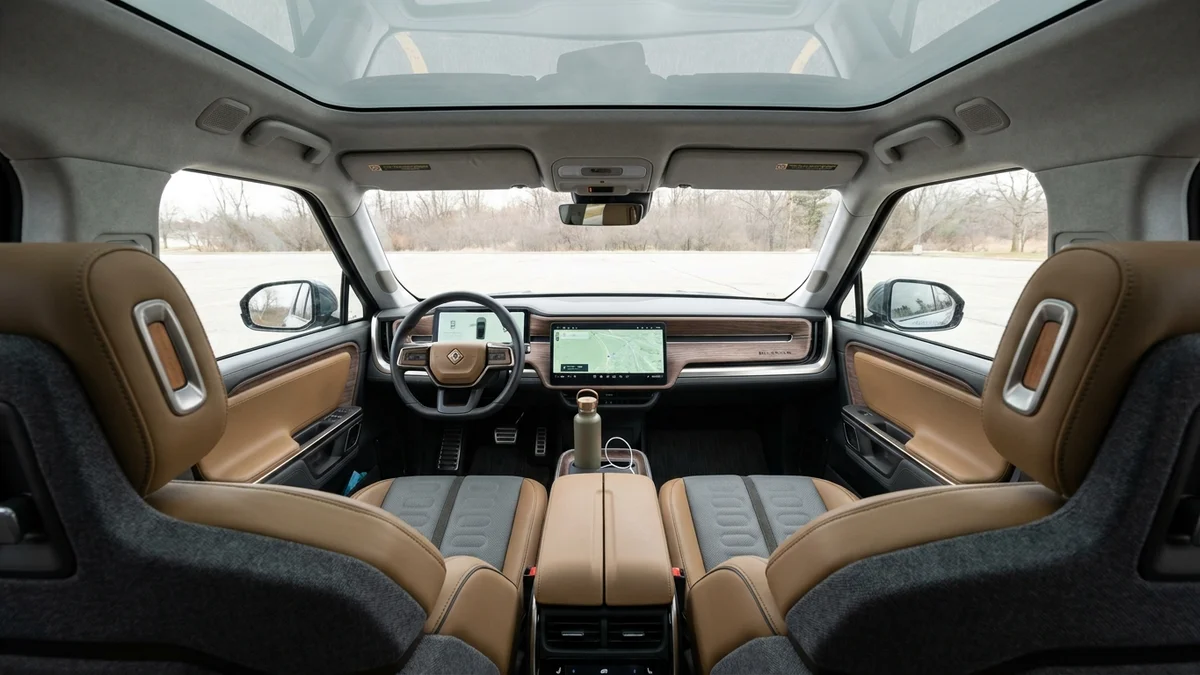
Not gonna lie: visibility out the back is mediocre. The R2's blocky D-pillar design photographs beautifully but creates blind spots that the standard 360-degree camera does most of the heavy lifting on.
At $45,000 before any tax credits for the Standard RWD (and $53,990 for the dual-motor AWD volume trim), the R2 is priced to fight. Let's see how that stacks up.
| Model (representative trim) | Starting Price | EPA Range | Peak Charging | 0-60 |
|---|---|---|---|---|
| Rivian R2 Premium AWD | $53,990 | 330 mi | 210 kW | 4.6s |
| Tesla Model Y Premium AWD | $53,990 | 327 mi | 250 kW | 4.6s |
| Hyundai Ioniq 5 Long Range AWD | from ~$48,000 | ~290 mi | ~235 kW | 4.5s |
| Kia EV6 Long Range RWD | ~$45,000 | 319 mi | ~240 kW | 7.2s |
| Ford Mustang Mach-E Premium ER | ~$48,000 | 320 mi | 150 kW | 5.2s |
| Chevrolet Equinox EV LT FWD | $34,995 | 319 mi | 150 kW | ~8.0s |
The Chevrolet Equinox EV undercuts everything in the segment by roughly $20,000 if value is your only metric. But you're giving up performance, charging speed, and any pretense of off-road ability. The Model Y wins on charging network and efficiency. The Ioniq 5 and EV6 win on charging speed via their 800-volt architecture.
The R2's pitch is straightforward: similar money, but with adventure DNA and a cabin that feels like it costs more than it does.
The R2 doesn't have to beat the Model Y on every spec. It just has to give buyers a reason to want something different. On that count, it absolutely succeeds.
Factor in incentives carefully. Federal credit eligibility depends on battery sourcing details Rivian hasn't fully published, and state incentives in California, Colorado, and New York can knock another $2,000-7,500 off depending on income.
Pros:
Cons:
The R2 makes the most sense for a few specific buyers.
Buy it if: You actually use the outdoors, not just talk about it. You want a Rivian but can't justify R1S money. You find the Tesla minimalism alienating. You've been waiting for an EV that doesn't look or feel like a kitchen appliance.
Skip it if: You road-trip constantly and need the fastest possible charging stops (Hyundai Ioniq 5 or Kia EV6 on 800-volt architecture are better). You're maximizing dollars-per-mile of range (Chevrolet Equinox EV wins). You need ironclad service availability everywhere (legacy brands still win on this).
If you're a first-time EV buyer in a metro area who plans to charge at home and road-trip occasionally, the R2 is genuinely one of the most balanced choices on sale. Just go in with realistic expectations about the slower DC charging and Rivian's still-growing service footprint.
The Rivian R2 review verdict is straightforward: this is one of the most important new EVs of 2026. Not because it's the fastest or the longest-range or the cheapest, but because it proves Rivian can build a desirable car at mainstream prices without diluting what makes the brand distinct.
At $45,000 for the Standard RWD or $53,990 for the dual-motor AWD volume trim, the R2 gives you nearly everything the R1S offers, minus a third row and the most extreme performance trims, for a much smaller share of the cost. That's a remarkable feat of engineering and product discipline.
Is it perfect? No. The charging speed cap will frustrate frequent road-trippers, and Rivian still has plenty to prove on long-term reliability and service. But this is the rare EV launch that delivers on the promise its automaker has been making for years.
Rivian R2 review final rating: 8.5/10. Worth the wait, worth the money, and worth a hard look against the Tesla Model Y if you're shopping in the mid-$40K to mid-$50K segment.
Sources
The Rivian R2 is the most credible Tesla Model Y challenger in years, delivering genuine adventure capability and a premium-feeling cabin at a true mainstream price.
Rivian began customer deliveries of the Premium and Performance dual-motor AWD trims in 2026, with the Standard RWD Long Range following in early 2027 and the $45,000 Standard RWD coming late 2027. Reservation holders with early deposits get priority. Build slots are allocated by reservation date, not zip code.
Eligibility depends on final battery sourcing details and your income level, and Rivian has not officially confirmed the R2 will qualify at launch. Even if the vehicle itself qualifies, single filers above $150,000 or joint filers above $300,000 are excluded. Leasing may unlock the credit through commercial-vehicle rules regardless of where batteries are sourced.
Rivian lists the R2 dual-motor AWD with a 3,500-pound base towing capacity, rising to roughly 4,400 pounds when properly equipped with the tow package. Expect roughly 50% range loss when towing near the maximum capacity at highway speeds, similar to what R1S owners report. That puts real-world towing range in the 150-170 mile ballpark per charge.
Yes. The R2 ships with a native NACS port, so it can plug directly into V3 and V4 Tesla Superchargers without an adapter. CCS charging at Electrify America, EVgo, and other networks requires the included CCS-to-NACS adapter, which Rivian provides in the vehicle.
Rivian operates roughly 100 service centers across the US as of early 2026, far fewer than Tesla's much larger service footprint or Hyundai's traditional dealer network. Mobile service techs handle most non-collision work, but body repairs can mean weeks of waiting in some markets. If you live more than 200 miles from a service center, factor this heavily into your decision.