9 Best Electric Cars Under $50,000 in 2026, Ranked | EV Verdict
0% read
9 Best Electric Cars Under $50,000 in 2026, Ranked
Best Of
9 Best Electric Cars Under $50,000 in 2026, Ranked
Nine EVs starting below $50k that actually deliver on range, charging speed, and value. Our 2026 rankings, with the picks worth your money and the ones to skip.
June 26, 202611 min read5 views
Sub-$50,000 used to mean compromise. In 2026, it means 300-plus miles of EPA range, 800-volt fast charging, and (in a few cases) genuine luxury-car polish. The mainstream EV finally grew up.
This ranking covers every major electric car with a starting MSRP under $50,000 before incentives. We weighed range, charging speed, efficiency, interior space, and likely value retention. No fluff, no participation trophies. If a car's on the list, it earned the spot.
Quick Picks: The Top 3 Best Electric Cars Under $50,000
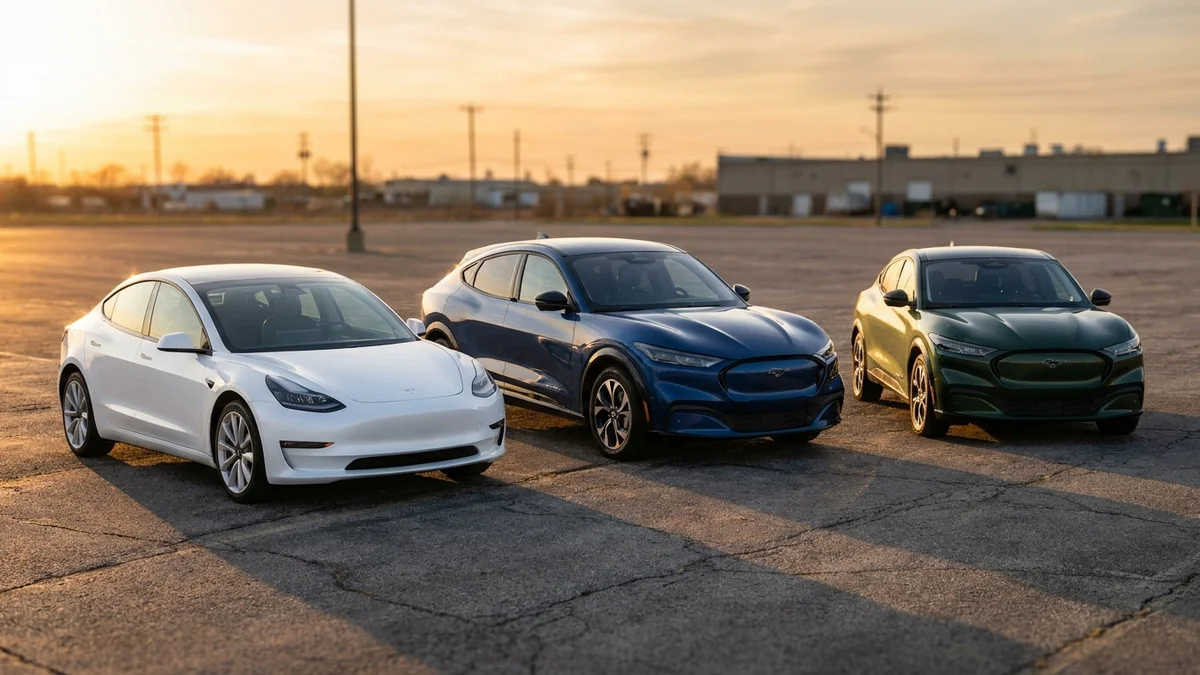
the best electric cars under $50,000 in 2026 are the Tesla Model 3 Premium RWD, the Hyundai Ioniq 6, and the Tesla Model Y. The Model 3 wins on charging-network access and efficiency, the Ioniq 6 nails long-distance value, and the Model Y still leads on road-trip practicality.
Rank
Model
Starting MSRP
EPA Range
One-Line Verdict
1
Tesla Model 3 Premium RWD
$42,490
363 mi
The efficiency-and-Supercharger king
2
Hyundai Ioniq 6 SE Long Range RWD
$42,800
342 mi
800V charging at a road-trip-friendly price
3
Tesla Model Y Standard
$39,990
321 mi
Best electric SUV for charging-network access
And if you want the cheapest sticker with no asterisks, the Chevrolet Equinox EV at $36,795 deserves a serious look. More on that below.
How We Ranked These EVs
This isn't a spec dump. We weighed five things, roughly in this order:
Real-world range. EPA figures, weighted against published cold-weather and highway test data from outlets like InsideEVs and Edmunds.
Charging speed. Peak kW matters, but the 10-80% time matters more. An 800V architecture beats a 400V one even at the same peak number.
Efficiency (mi/kWh). The single most underrated EV stat. Better efficiency means lower running costs and shorter charge stops.
Practical space and tech. Cargo, rear-seat room, software quality, and whether the touchscreen makes you want to scream.
Likely incentive eligibility. Federal credit rules shift constantly and depend on battery sourcing and your income, so check current eligibility before signing anything.
Nothing here was driven by us back-to-back; these rankings draw on manufacturer specs, EPA data, and published independent testing. Where we've a strong opinion, we say so.
1. Tesla Model 3 Premium RWD: $42,490
Best overall value under $50k
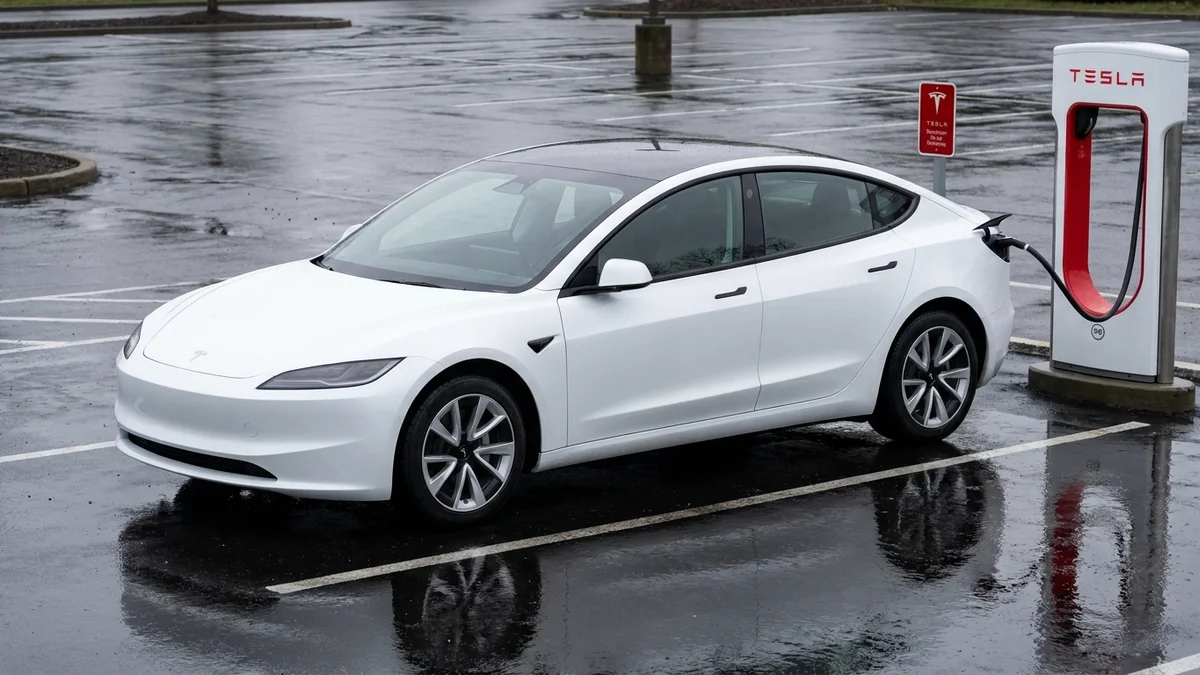
The 2026 Model 3 Premium RWD is the EV equivalent of a default option you can't beat. 363 miles of EPA range. Roughly 4.0 mi/kWh efficiency. 250 kW peak Supercharging on the only fast-charging network that just works, every time, with no app theater. Tesla quotes a 0-60 mph time of about 5.8 seconds for the Premium RWD; step up to the Premium AWD and that drops to a Tesla-claimed 4.2 seconds.
Is the interior minimalist to a fault? Yes. The lack of a turn-signal stalk on US cars is genuinely annoying, and Tesla's insistence on burying basic controls in the touchscreen still rankles. But the rest of the package is so dialed-in that you stop caring after a week.
What's pretty solid here is the total cost picture. Strong efficiency plus Supercharger pricing plus low maintenance means the Model 3 typically posts the lowest five-year ownership cost on this list, according to most published estimates.
Best for: Commuters and road-trippers who want range, efficiency, and zero charging anxiety.
Skip if: You hate touchscreens or want physical buttons.
2. Hyundai Ioniq 6: $42,800
Best for road-trippers
The Ioniq 6 is the most underrated EV on sale. 342 miles of EPA range in SE Long Range RWD trim. Strong efficiency in the low-4 mi/kWh range. Up to roughly 235 kW peak charging on Hyundai's 800V E-GMP platform, which Hyundai claims can take the pack from 10-80% in about 18 minutes on a 350 kW station. And for 2026, it ships with a native NACS port, so you get Supercharger access without a clunky adapter.
The styling is divisive. We think it looks great, like a Porsche 911 that got into the Tesla parts bin. Your neighbors may disagree.
Inside, the dual 12.3-inch displays run circles around Tesla's single screen for actual usability, and Hyundai had the good sense to keep physical climate buttons. The rear seat is tight for a sedan this size (the swoopy roofline costs you headroom), but trunk space is decent.
Best for: Highway commuters and road-trippers who value charging speed over badge prestige.
Skip if: You need maximum rear-seat headroom or a hatchback (it's a true sedan trunk).
3. Rivian R2: from ~$45,000 (Standard trim, late-2027 production)
Best for adventure and personality
The R2 is the first Rivian aimed squarely at the mainstream.
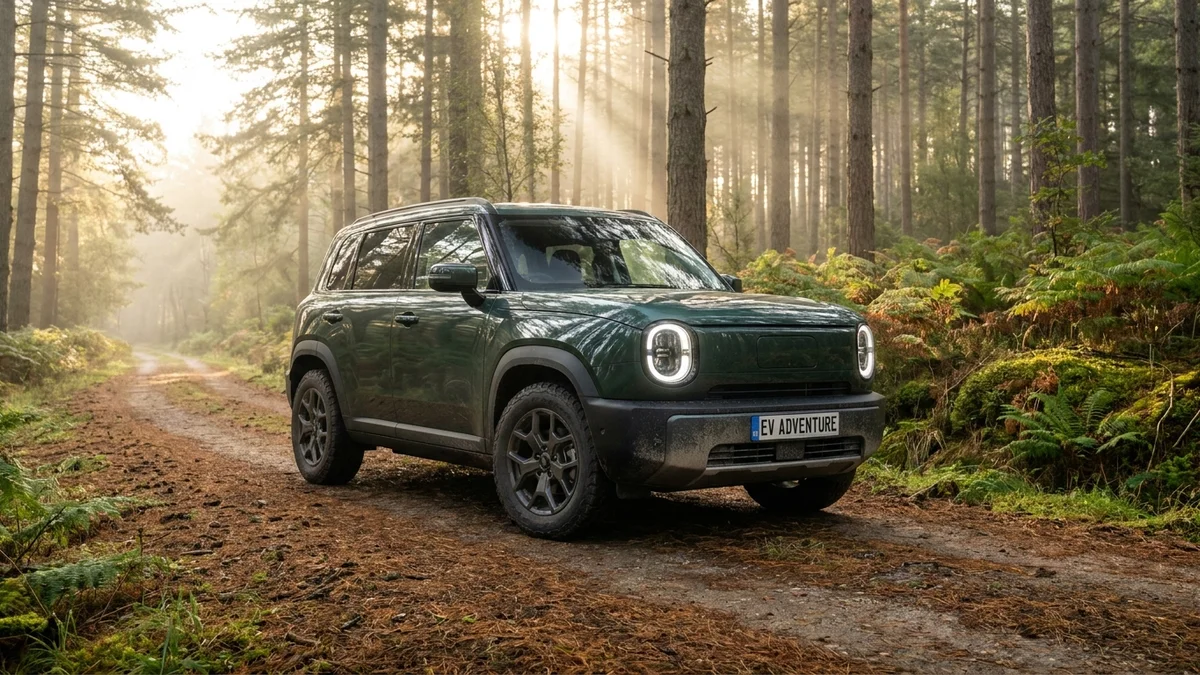
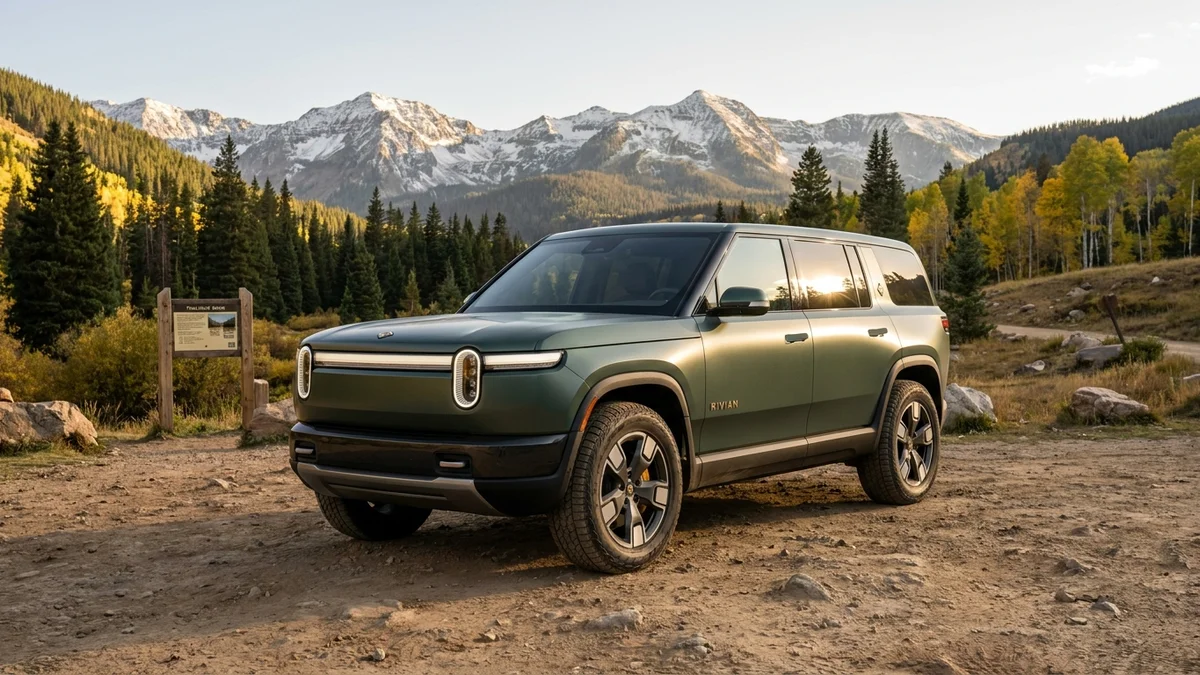
Rivian's R2 brings the brand's design language and software to a midsize SUV that targets the Model Y and Ioniq 5. The R2 Standard is the trim Rivian has pegged at a starting price of about $45,000 (manufacturer-claimed), but it isn't due into production until late 2027 and is rated at roughly 275 miles of range. The trims actually shipping in 2026, the Performance Launch at $57,990 and the dual-motor Premium at $53,990, push above $50k but deliver up to a Rivian-claimed 330 miles of EPA range, 200 kW peak charging, and serious off-road hardware derived from the R1 platform.
The interior is the real story. Rivian's software is the only EV interface that genuinely rivals Tesla's, and the R2's cabin uses better materials than anything else at this price. The integrated camp speaker, the front-trunk storage, the gear-tunnel design DNA from the R1, it all carries over.
Delivery timing is the catch. Rivian opened customer deliveries of the R2 Performance in June 2026, with Premium following later in the year. So if you want one for the sticker price you've heard about, you'll be waiting into 2027.
Best for: Buyers who want personality, capability, and software that doesn't feel like a 2018 Android tablet.
Skip if: You need the cheapest trim now, that one won't ship until late 2027.
4. Tesla Model Y (Juniper): from $39,990
Best electric SUV on a charging trip
The 2026 Juniper refresh fixed most of what was wrong with the old Model Y. Suspension is softer. Cabin noise is way down. The new rear screen for back-seat passengers is a nice touch. The Standard RWD starts at $39,990 with an EPA-estimated 321 miles of range, while the Premium RWD steps up to $45,990 and stretches that to 357 miles. Either way you get 250 kW Supercharging and a cargo area that swallows luggage like nothing else in the segment.
Is it still the best-driving electric SUV under $50k? Not anymore. The Ioniq 5 and EV6 have it beat on ride comfort and steering feel. But on a 1,000-mile road trip, the Model Y's combination of efficiency and Supercharger access is still untouchable.
One note on performance: trim matters. The base RWD's 0-60 is more leisurely than the AWD's; check the configurator if acceleration is a priority.
Best for: Family road-trippers who prioritize charging convenience.
Skip if: You want a comfort-tuned ride or hate yoke-style minimalism.
5. Chevrolet Equinox EV, $36,795
Best value sticker price
The Equinox EV is one of the cheapest EVs on the market with over 300 miles of range. $36,795 starts the lineup. 319 miles of EPA range on the FWD trim (307 on AWD). And it's a properly sized compact SUV with a usable back seat and a decent cargo area.
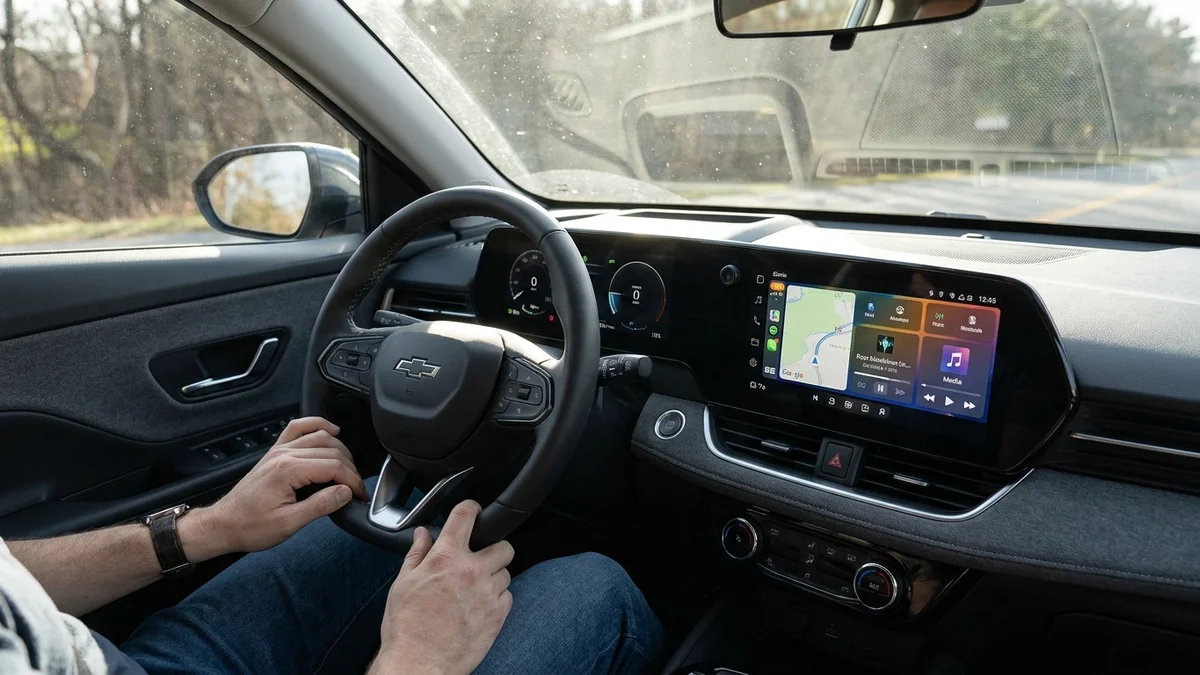
The catches are real. 150 kW peak DC fast charging is slow for 2026, and you'll need a GM-approved NACS adapter to use Tesla Superchargers, the Equinox EV still ships with a CCS port, not a native NACS inlet. Zero-to-60 takes about 7.7 seconds in FWD form and around 5.9 seconds in AWD, which is fine but not thrilling. The infotainment uses GM's Google-built system, which is good, though GM's bizarre decision to drop Apple CarPlay and Android Auto on EVs is a deal-breaker for some buyers.
At this price, with this range, the trade-offs are easy to swallow. If you mostly home-charge and rarely road-trip, this is the smartest dollar-per-mile buy on the market.
Best for: Daily drivers who home-charge and want maximum range per dollar.
Skip if: You road-trip often (the slow DC charging will get old fast) or you can't live without CarPlay.
6. Hyundai Ioniq 5, from $35,000
Best interior under $50k
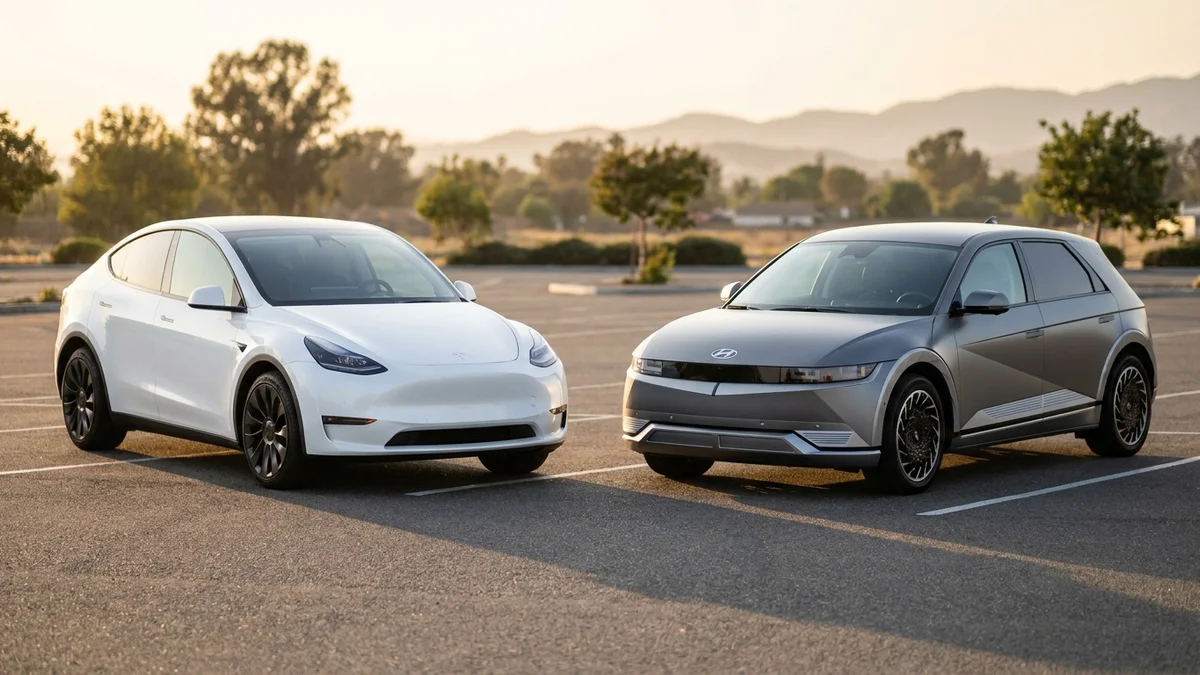
The Ioniq 5 has been our segment favorite for two years running, and the 2026 update keeps the streak going. The lineup now starts at $35,000 for the Standard Range trim, with the long-range SE RWD opening at about $37,500 and stretching the EPA rating to 318 miles. Charging tops out at roughly 235 kW on the 800V E-GMP platform, and a native NACS port arrives standard for 2026. The interior is genuinely lovely, with a sliding center console, flat floor, lounge-grade seating, and a cabin that feels much more expensive than the price tag suggests.
Why is it ranked below the Ioniq 6? Efficiency. The Ioniq 6's slippery shape returns roughly 4.1 mi/kWh; the upright Ioniq 5 manages closer to 3.5. Over a year of driving, that gap adds up in both charge time and electricity costs.
But if you need SUV practicality and prefer a relaxed driving feel, this is the move. The retro styling has aged really well, and the N Line trim adds enough visual aggression without compromising comfort.
Best for: Buyers who want a comfy, character-rich electric SUV with fast charging.
Skip if: You're chasing maximum efficiency or range per dollar.
7. Kia EV6, from $37,900
Best driver's EV in this price range
Mechanically a sibling to the Ioniq 5, but tuned completely differently. The EV6 is the sportier, lower-slung interpretation. The 2026 lineup starts at $37,900 for the Light Standard Range and $41,200 for the Long Range RWD trim that hits 319 miles of EPA range. Long Range trims charge at up to 240 kW thanks to 800V architecture, and a native NACS port is standard for 2026. Steering still has actual feel, a rarity in this class.
The trade-off versus the Ioniq 5 is space. The EV6's sleeker roofline costs you rear headroom and some cargo flexibility. The interior also feels a half-step less premium, though it's still well-built. The hottest variant, the EV6 GT, rated at up to a Kia-claimed 641 hp with Launch Mode and a 3.4-second 0-60, has been delayed for the 2026 US model year, so if you want the full-fat performance trim, you'll need to wait.
Best for: Drivers who want sportiness without sacrificing the 800V charging advantage.
Skip if: You want maximum cabin space (the Ioniq 5 is roomier).
8. Chevrolet Blazer EV, $46,495
Best for size and tech features
The Blazer EV had a rough 2024 launch (software issues led to a stop-sale), but the 2026 model is a different car. The LT FWD opens the lineup at $46,495 with up to 312 miles of EPA range on the bigger battery, 150 kW peak DC fast charging, and a 17.7-inch infotainment screen. The performance-oriented SS trim climbs past $62k but adds a 102 kWh pack capable of 190 kW charging and genuinely fun handling.
The big complaint is still GM's no-CarPlay policy and the so-so efficiency. The Blazer drinks more electrons than the segment average, and on cold winter days, real-world range can drop noticeably below the EPA figure.
For buyers who want a bigger electric SUV with character and don't road-trip often, it's a credible pick. For everyone else, the Tesla and Hyundai options offer better efficiency for similar money.
Best for: Buyers who want size, style, and don't mind GM's infotainment quirks.
Skip if: Efficiency or cold-weather range is a priority.
9. Ford Mustang Mach-E, from $39,840
Best discount opportunity
The Mustang Mach-E is a perfectly competent EV that suffers from the curse of being good but never great. Up to 320 miles of EPA range in extended-range RWD trim. Ford claims a sub-5-second 0-60 for the higher-output AWD trims, while Edmunds testing of a typical dual-motor AWD car put the real-world figure closer to 5.2 seconds. The build quality holds up, with a cabin that's aged better than the Tesla Model Y's pre-Juniper interior.
The problem is the charging speed. About 150 kW peak puts it behind every other major competitor here, and through the 2026 model year the Mach-E still uses a CCS1 port, requiring Ford's NACS adapter to access Tesla's Supercharger network.
Where the Mach-E wins is dealer pricing. Ford has been aggressive with discounts and lease deals, and you can often drive one home for several thousand below sticker. So if you find a deal, it's worth a look.
Best for: Buyers chasing a discount on a known-good EV.
Skip if: You road-trip frequently or want the very latest charging speeds.
What Didn't Make This List
A quick word on what didn't make this list. The BYD Seal and Atto 3 aren't sold widely in the US, so they're excluded despite strong specs. The Volkswagen ID.4 is competitive but feels a step behind on charging speed and software. And the Nissan Ariya, while pleasant, is overpriced relative to what the Hyundai-Kia twins offer for similar money.
Federal Tax Credits and Real Out-the-Door Pricing
Several cars on this list may qualify for the federal EV tax credit, which can knock up to $7,500 off the effective price. But eligibility shifts based on battery sourcing, assembly location, and your household income, and the rules have changed multiple times in the past two years.
Don't assume. Check the current list at fueleconomy.gov before you sign, and ask the dealer to confirm in writing. State and utility incentives can add another $1,000 to $5,000 on top.
The Bottom Line
If you want one recommendation: the Tesla Model 3 is still the best electric car under $50,000 in 2026. The efficiency, the Supercharger access, the resale value, all of it adds up.
But the gap has closed dramatically. The Hyundai Ioniq 6 is a better road-trip car for the money. The Equinox EV at $36,795 is a steal. And the Ioniq 5 has the nicest cabin under $50k.
Not gonna lie, this is the first model year where you can shop EVs under $50k without compromise. Pick the one that fits your life. They're all good cars.
Which electric car under $50,000 has the longest EPA range in 2026?
The Tesla Model 3 Premium RWD leads at 363 miles of EPA range from $42,490, ahead of the Hyundai Ioniq 6 SE Long Range RWD at 342 miles from $42,800. Both clear the Tesla Model Y Premium RWD (357 miles, $45,990) once you step up trims. If absolute range per dollar is your only metric, the Model 3 Premium RWD is the pick.
Can I still get the $7,500 federal EV tax credit on these cars in 2026?
Eligibility changes frequently based on battery sourcing, US assembly, and your income. As of 2026, US-assembled EVs like the Tesla Model 3, Tesla Model Y, Chevrolet Equinox EV, and Chevrolet Blazer EV are the most reliable candidates for the full $7,500, while Korean-built Hyundai and Kia models such as the Ioniq 6 and EV6 typically qualify only through leasing (via the commercial-vehicle pathway). Always confirm at fueleconomy.gov before signing, since rules can shift.
Is the Chevrolet Equinox EV worth buying despite the slow 150 kW charging?
Yes, if you mostly home-charge. At a starting MSRP of about $36,795 with 319 miles of EPA range in FWD form, it's one of the cheapest 300-plus-mile EVs on the US market. The slow DC fast charging only matters on long road trips; for daily commuting and Level 2 home charging, you'll barely notice.
What's the cheapest electric SUV with three rows under $50,000?
There isn't one. Every legitimate three-row electric SUV (Kia EV9, Hyundai Ioniq 9, Rivian R1S, Volvo EX90) starts above $50,000. The closest you can get under $50k is a two-row midsize like the Tesla Model Y Premium RWD ($45,990) or the upcoming Rivian R2 Standard, whose roughly $45,000 starting price isn't due into production until late 2027. For three rows on a budget, you'll need to consider a plug-in hybrid like the Kia Sorento PHEV instead.
Should I wait for the rumored cheaper Tesla or buy now?
Tesla has talked publicly about cheaper models but has not confirmed firm launch timing or final pricing beyond what's already on sale. Waiting for unannounced vehicles is rarely worth it; you'll spend a year paying for gas in the meantime. If you need a car now, the Equinox EV or Model 3 are better bets than waiting on rumors.